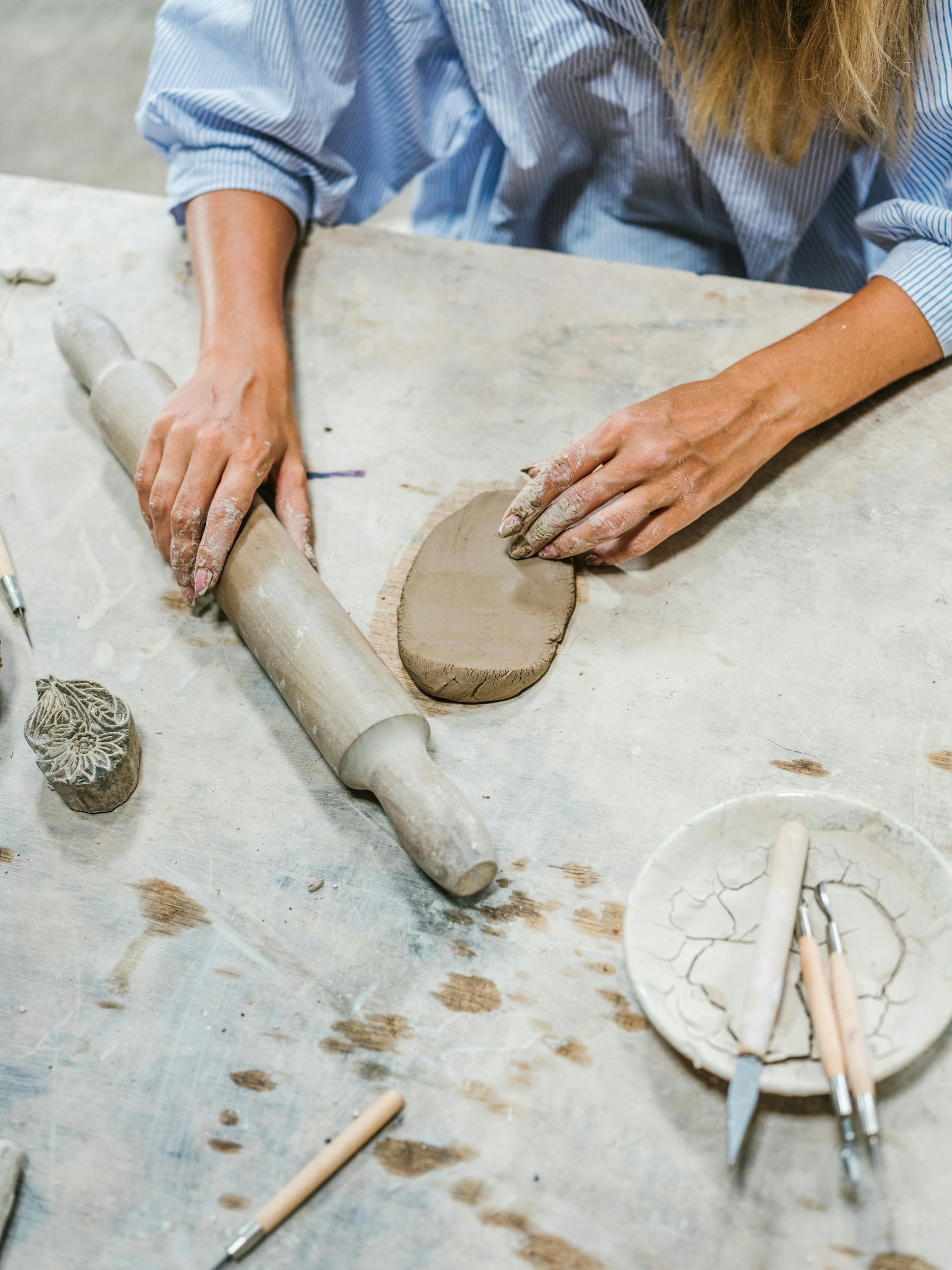
The history of hand built pottery
Hand building is the oldest method of creating ceramic vessels. It dates back thousands of years before the invention of the pottery wheel (approx. 3500 BCE). Techniques like pinching, coiling, and slab construction were used by early humans in the Paleolithic era (c. 29,000 BCE), shaping clay to create functional storage, cooking, and ceremonial items.
- Decoration and Firing: Early potters used materials like bone, wood, and stone for shaping. Pots were often fired in simple pit bonfires, reaching around 900 degrees C.
- Global Spread: Hand building evolved independently across the globe, including in Sub-Saharan Africa and across South, Central, and North America.
- Transition to the Wheel: Although the pottery wheel was invented around 3500 BCE in Mesopotamia, hand building continued to be used for unique, sculptural, and large-scale, non-symmetrical pieces.
Today, hand building is valued for its tactile nature and personal touch, linking ancient traditions and modern artistic expression. It is used by contemporary artists to create unique and large-scale pieces that cannot be made on a wheel.